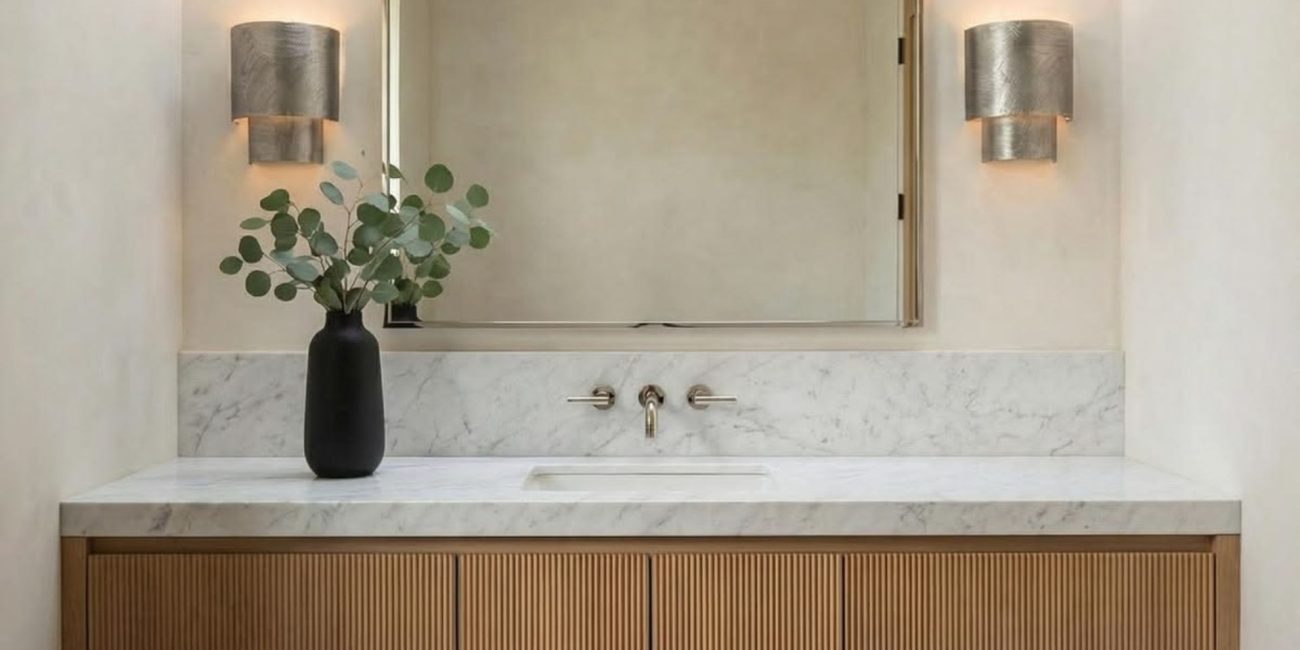
Selecting the ideal vanity countertop requires balancing moisture resistance, daily durability, and aesthetic appeal to ensure your bathroom remains functional and stylish. By prioritizing non-porous materials that withstand heat and humidity, you solve the long-term challenge of maintenance while instantly elevating your home’s overall interior value and design.
Beyond simple looks, the right choice involves evaluating your specific lifestyle needs—such as how often the space is used and your preference for natural versus engineered stone. Whether you are performing a full renovation or a quick refresh, understanding the technical differences between materials is essential.
Why the Vanity Countertop is the Heart of Your Bathroom
The vanity is often the focal point of the bathroom. It is the first place you go in the morning and the last place you visit before bed. Because it holds your sink and sits at eye level, the vanity tops you choose will set the tone for the entire room’s design.
When picking a material, you need to balance three main things:
- Durability: Can it stand up to moisture and daily use?
- Maintenance: How much time do you want to spend cleaning it?
- Aesthetics: Does it match your dream bathroom look?
7 Essential Things to Consider Before Buying
Choosing a vanity countertop is a long-term investment. To help you rank your priorities, here are the top factors to keep in mind when shopping for your next bathroom countertop:
1. Resistance to Moisture and Humidity
Bathrooms are naturally damp, high-traffic environments. Your bathroom counter top will be constantly exposed to splashing water, high humidity, and steam from the shower.
- Why it matters: Materials like unprotected wood or low-quality laminate can warp, rot, or grow mold over time.
- The Solution: Opt for non-porous surfaces like Fugenstone Quartz or well-sealed Granite stone. These materials ensure that water stays on the surface rather than soaking into the core, preserving the structural integrity of your vanity.
2. Resistance to Stains and Chemicals
Think about the variety of substances that touch a bathroom counter: toothpaste, hair dye, nail polish remover, perfumes, and harsh soapy water.
- The Risk: Many natural stones, particularly marble, are “acid-sensitive.” This means a spill of lemon-scented cleaner or a drop of perfume can cause “etching”—a dull spot that ruins the shine.
- Expert Insight: For a busy bathroom, Fugenstone Quartz is the ultimate low-maintenance choice. Its non-porous surface resists stains from soaps and perfumes, keeping your vanity spotless without the need for resealing.
3. Heat Resistance from Styling Tools
Do you use a hair straightener, blow dryer, or curling iron daily? If so, your vanity tops must be able to withstand high temperatures.
- The Danger: Placing a hot tool directly onto a cheap laminate or solid-surface counter can leave a permanent yellow burn mark or even cause the material to crack.
- Best Materials: Granite stone is virtually heat-proof, as it was formed in volcanic heat. While Quartz is tough, it contains resins that can be damaged by extreme heat, so always use a heat-resistant mat for styling tools.
4. Ease of Cleaning and Long-Term Maintenance
Some homeowners love the ritual of caring for high-maintenance materials, while others want a “wipe and go” solution.
- Low Maintenance: Fugenstone Quartz never needs to be sealed. You simply wipe it with a damp cloth and mild soap.
- High Maintenance: Natural marble and Travertine require annual sealing and specific pH-neutral cleaners. Consider your lifestyle—if you have a busy household with kids, go for the low-maintenance option to save time and stress.
5. Integration with Sink Styles
The countertop and sink are a package deal. Your choice of sink will determine exactly how the vanity countertop is fabricated and cut at the factory.
- Undermount Sinks: These sit beneath the counter for a sleek, “seamless” look. They make cleaning easy because you can wipe water directly into the sink. They require a polished edge on the stone cutout.
- Vessel Sinks: These sit on top of the counter like a decorative bowl. These require only a small hole for the drain, showing off more of your beautiful bathroom countertop material.
- Drop-in Sinks: These have a “lip” that sits on the counter. They are the easiest to install, but can trap dirt around the edges.
6. Edge Profiles and Safety
The “profile” refers to the shape of the edge of your stone. This is a subtle detail that changes the whole vibe of the room.
- Modern Style: Square or “Eased” edges look sharp, clean, and minimalist.
- Traditional Style: “Ogee” or “Bullnose” edges have decorative curves that feel classic and expensive.
- Safety Factor: In small bathrooms or “powder rooms,” rounded edges (like a Half-Bullnose) are much safer. They prevent painful bruises if you accidentally bump into the corner in a tight space.
7. Budget vs. Long-Term Home Value
Prices for vanity tops vary wildly based on rarity and brand.
- Short-Term Savings: Laminate or tile might be cheaper today, but they don’t last as long and don’t help your home’s resale value.
- Long-Term Investment: Investing in high-quality granite or marble stone can significantly increase your home’s market price. Because the bathroom is a small area, you often only need a small slab (or a “remnant”), which allows you to get a luxury look without the luxury price tag of a full kitchen renovation.
Popular Materials for Your Vanity Countertop
Choosing the right material for your vanity depends on your lifestyle and design goals. Here are the most popular materials available today:
Granite (Granite Stone)
- Pros: Offers incredible durability and one-of-a-kind natural beauty. It is highly heat-resistant and nearly impossible to scratch with daily bathroom items like brushes or bottles.
- Cons: Being a natural stone, it is slightly porous and requires a professional sealer once a year to prevent staining from oils or makeup.
Marble (Marble Stone)
- Pros: Represents the ultimate luxury look. It stays naturally cool to the touch and features iconic, elegant veining that significantly increases property value.
- Cons: It is a softer stone compared to others. It can be sensitive to “etching” (dull spots) caused by acidic liquids like perfumes, citrus-based soaps, or harsh cleaners.
Quartz (Fugenstone Quartz)
- Pros: This is a top choice for 2026. As an engineered Fugenstone Quartz, it is completely non-porous, meaning it never needs sealing. It is extremely tough, hygienic, and available in a vast range of colors.
- Cons: It is not as heat-resistant as natural granite. You should use a protective mat if you plan on resting hot hair straighteners or curling irons on the surface.
Travertine (Travertine Stone)
- Pros: Provides a unique, “old-world” Mediterranean charm with a warm, earthy color palette. It is naturally slip-resistant and stays cool under various lighting conditions.
- Cons: It has natural pits and holes that must be filled during manufacturing. It is very porous, meaning it requires regular sealing and careful cleaning to prevent moisture from seeping into the stone.
Maintenance Tips for a Long-Lasting Bathroom Counter Top
- Avoid Harsh Chemicals: Never use bleach or abrasive “scrub” cleaners on natural stone. Use pH-neutral soap and water.
- Use Coasters: It sounds funny for a bathroom, but placing perfumes and lotions on a small tray prevents “rings” from forming on the surface.
- Wipe Spills Fast: Even water can leave mineral spots if left to dry for too long on polished surfaces.
- Seal Regularly: If you choose a natural vanity countertop, check every year if water still beads up on the surface. If it soaks in, it’s time to reseal.
Conclusion
Choosing the right vanity countertop is about making a smart decision that fits both your daily needs and design goals. From moisture resistance and durability to maintenance and style, every factor plays an important role in how your bathroom performs over time.
By understanding the strengths of different materials and matching them with your lifestyle, you can avoid common issues like stains, damage, or high maintenance. Whether you prefer natural stone for its elegance or engineered surfaces for their ease of care, the right choice will enhance both comfort and functionality.
Frequently Ask Question
Which material is best for a master bathroom vanity countertop?
For master bathrooms, Fugenstone Quartz or Granite stone are the best choices because they handle heavy daily use, makeup, and water splashes without staining.
Can I use kitchen countertop leftovers for my bathroom?
Yes. Bathrooms are smaller, so leftover pieces (remnants) are often enough and help you save money.
Is marble too delicate for a bathroom?
Marble needs care. It works well in low-use bathrooms, but for heavy daily use, quartz is a better option.
How high should my vanity countertop be?
The modern standard “comfort height” is 36 inches. Older vanities were often 30–32 inches, but higher counters are better for your back.
What is the most waterproof bathroom countertop?
Engineered stones like Fugenstone Quartz by Ronak International are the most waterproof because they are non-porous and have no microscopic holes for water to hide in.