
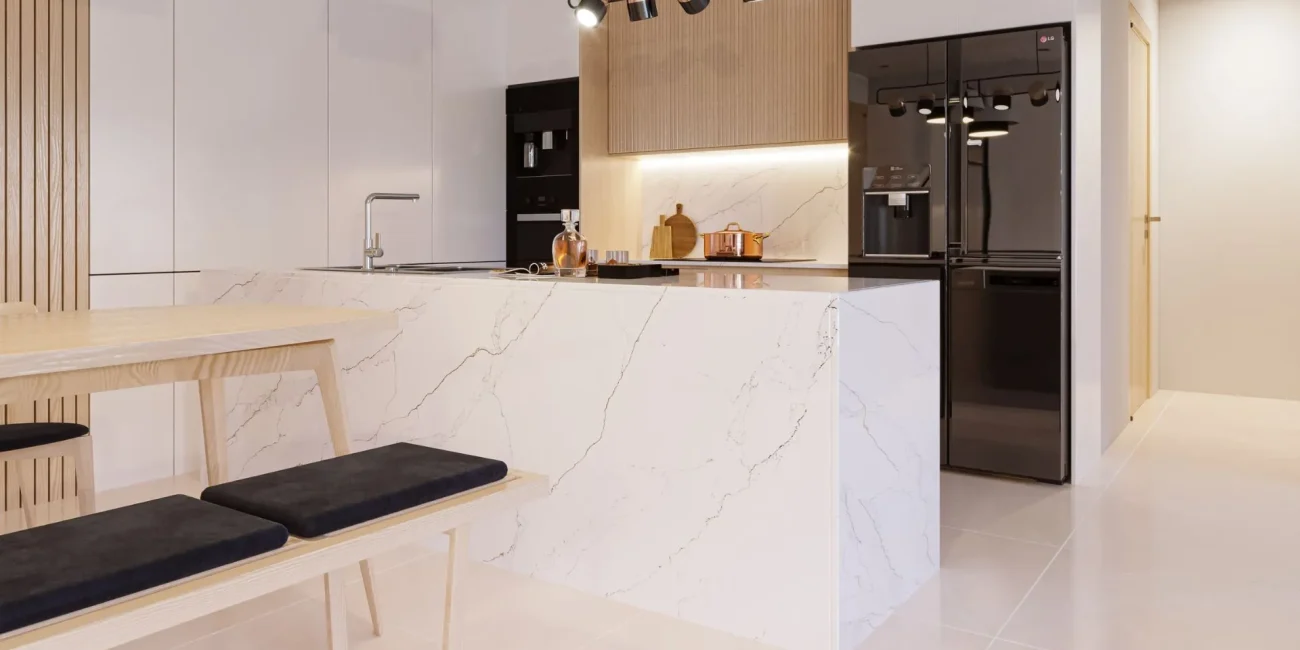
Choosing the right kitchen countertops is the most significant decision in any home renovation. This surface is the literal “workbench” of your home—it’s where you prepare family meals, kids do their homework, and friends gather for coffee. Because it is a permanent fixture, making the wrong choice can lead to years of regret, expensive repairs, or difficult maintenance.
In this comprehensive guide, we will explore the latest kitchen countertop trends, compare the most popular materials, and give you the professional advice you need to choose a surface that fits your lifestyle.
Understanding Your Kitchen Lifestyle
Before looking at colors, you must evaluate how you actually use your space. Not all kitchen countertops are created equal, and the best choice depends on your daily habits.
- The Heavy Cook: If you are someone who cooks three meals a day, uses heavy cast-iron pans, and works with colorful spices (like turmeric or saffron), you need a “bulletproof” surface. Granite is famous for its ability to withstand heat and scratches from heavy pots.
- The Busy Parent: If you have young children, spills are inevitable. Juice, milk, and felt-tip pens can ruin porous surfaces. In this case, quartz countertops are often the best choice because they are non-porous and “spill-proof.”
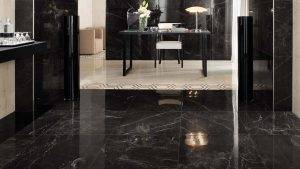
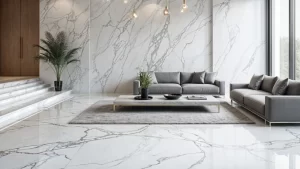
- The Luxury Enthusiast: If your kitchen is more of a social gallery and you value high-end aesthetics over heavy scrubbing, the timeless beauty of marble is unmatched. It adds a sophisticated, cool-to-the-touch feel that other materials simply cannot replicate.
Comparing the Top Stone Materials
When you visit a stone supplier in the UAE, you will likely be presented with three main options. Here is a deep dive into each:
Fugenstone Quartz Countertops (The Modern Favourite)
Fugenstone Quartz is an engineered stone made from roughly 90-95% crushed natural quartz and 5-10% resin binders.
- Why it’s a trend: It looks like expensive marble but is stronger and more durable, making it a practical choice for modern spaces.
- Maintenance: It never needs to be sealed. It is the most hygienic option because bacteria cannot grow on the surface.
- Best for: Modern, low-maintenance homes.
Granite Countertops (The Natural Powerhouse)
Each slab of granite countertops is unique, created by the earth over millions of years. No two kitchens will ever look the same.
- Durability: It is one of the hardest materials on earth. You can take a boiling pot of pasta and put it directly on the stone without a trivet (though we still recommend protection).
- Aesthetics: It offers a “speckled” or “veined” look that adds organic warmth to a room.
- Best for: High-heat cooking and outdoor kitchens.
Marble Countertops (The Classic Elegance)
Marble countertops are a metamorphic rock that has been used in palaces for centuries.
- The Feel: It stays naturally cool, which is why professional bakers love it for rolling out pastry and dough.
- The Trade-off: It is a softer stone. It is prone to “etching”, which is a chemical reaction that leaves a dull spot when an acidic liquid like lemon juice or vinegar touches it.
- Best for: High-end aesthetics and baking stations.
Current Kitchen Countertop Trends for 2026
To ensure your home stays valuable for the next decade, keep these kitchen countertop trends in mind:
- Extra-Thick Edges: While the standard thickness is 2 cm or 3 cm, many designers are now “mitring” the edges to make the countertop look 6 cm to 10 cm thick. This creates a bold, architectural statement.
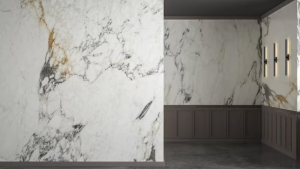
- The Full-Height Backsplash: Instead of using tiles, homeowners are using the same slab of Fugenstone or marble for the wall behind the stove. This eliminates grout lines and makes the kitchen look much larger.
- Sustainable Sourcing: People are asking their stone supplier in the UAE where the stone comes from. There is a huge trend toward eco-friendly stones and brands that prioritize ethical mining.
Technical Factors: Thickness, Edges, and Sinks
A great kitchen is in the details. When you order your countertops for the kitchen, you need to decide on the following:
Slab Thickness
Most stones come in 20 mm or 30 mm. 30 mm is the standard for a luxury feel and better structural strength for large islands.
Edge Profiles
- Eased Edge: A slightly rounded square edge. Very modern.
- Bullnose: A fully rounded edge. Great for safety in homes with toddlers.
- Ogee: An “S” shaped curve. Best for traditional or “French Provincial” styles.
Sink Cutouts
- Undermount: The sink is installed under the stone. This allows you to wipe crumbs directly into the sink—no “lip” to catch dirt.
- Flush-mount: The sink and stone are at the same level.
Conclusion
Selecting the right surface for your home is a balance between your daily needs and your design dreams. Whether you love the natural strength of granite, the classic prestige of marble, or the modern, easy-care nature of quartz, your choice will define your home’s character. By matching a material to your lifestyle and maintenance preferences, you can create a beautiful, lasting space where your family will love to spend time.
Frequently Ask Question
Is Quartz better than Granite for a kitchen?
It depends on your lifestyle. Quartz is best if you want a stain-resistant surface with zero maintenance. Granite is better if you do heavy cooking and need a material that can handle high heat and natural patterns.
How often do I need to seal my natural stone?
Most natural stones should be sealed every 12 to 18 months. You can test this by dropping water on the surface; if the water beads up, the seal is good. If it soaks in, it’s time to reseal.
Why is my countertop showing dull spots?
This is likely “etching,” which happens when acidic liquids like lemon juice, vinegar, or wine react with the stone. It is not a stain, but a change in the surface texture that can usually be polished out.
Can I put hot pans directly on the granite surface?
Granite can handle hot pots and pans directly because it is highly heat-resistant. However, for engineered surfaces like quartz, it is best to use a trivet, as extreme heat can damage the surface over time.
How do I choose the color for a kitchen countertop?
For dark kitchens: Choose light colors like white, cream, or soft grey to reflect light and make the space feel brighter and more open.
For light kitchens: You can choose both light tones for a clean look or darker shades to create contrast and add depth to the design.