
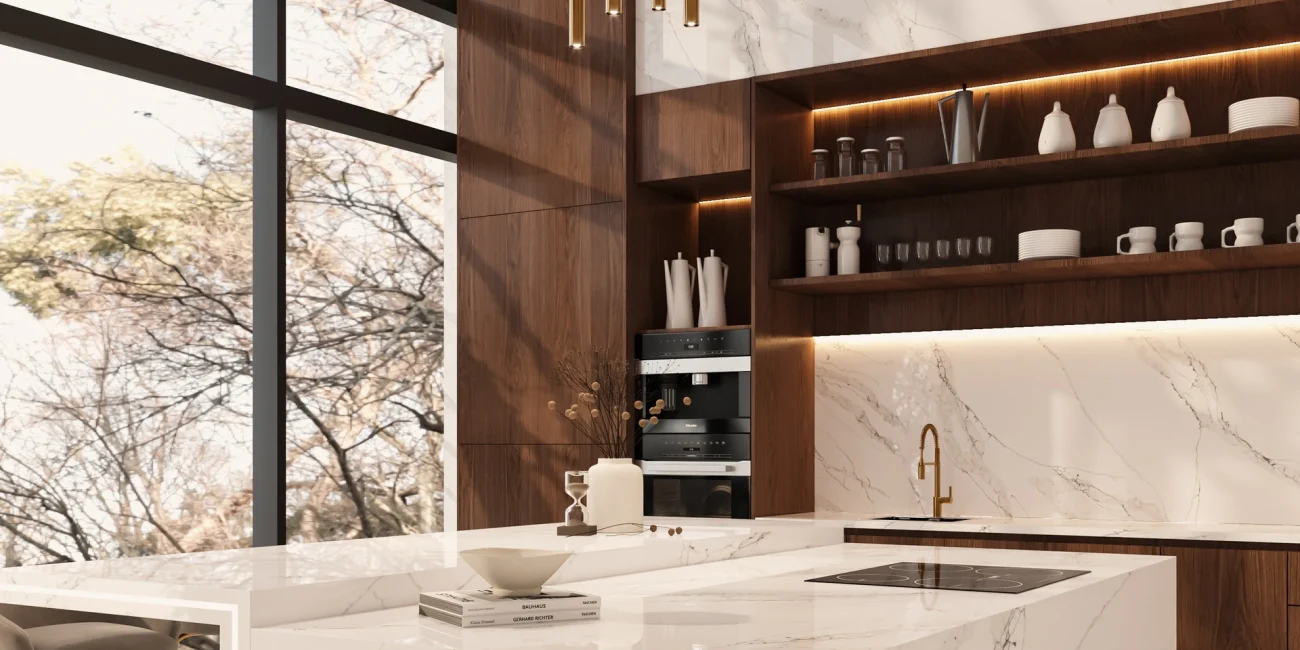
Many kitchens can feel flat, repetitive, or lacking personality, making the heart of the home feel less inviting than it should. The biggest challenge is to create a space that is modern and timeless but not visually cluttered or chaotic. Two-tone kitchens are the perfect fix for a one-note design, adding depth, contrast, and personality to your cabinets.
In this guide, you will learn how to master colour balance, choose the right materials, and avoid common pitfalls to ensure your kitchen remains a stunning investment for years to come.
Are Two-Tone Kitchens Out of Style in 2026?
A common concern for many renovating a home is whether two-tone kitchens are a fad or a lasting staple. The short answer is no, they are not out of style; in fact, they have evolved into a sophisticated design standard. Unlike the high-contrast tuxedo looks of the early 2010s, modern 2-tone kitchens focus on subtle shifts in texture and earthy palettes.
Why it’s Staying Popular
- Homeowner Choice: Recent 2026 trends show that about 40% of people remodelling their kitchens choose a contrasting colour for their island or a split-cabinet look.
- The Vibe: It makes a kitchen feel more like a custom-designed living space and less like a showroom.
- Versatility: Whether the home is a traditional farmhouse or a sleek modern apartment, this style fits right in.
Stone-Inspired Design Ideas for Two-Tone Kitchens
When exploring two-tone kitchen design ideas, the possibilities are nearly endless, but a few specific layouts consistently lead the market in both beauty and functionality.
1. The Classic Dark Base and Light Upper
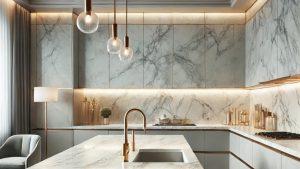
Top marble suppliers in the UAE consider this a gold standard for a reason. By placing darker colours like navy, forest green, or charcoal on the lower cabinets and keeping the uppers white or cream, the room feels anchored without becoming heavy. To bridge the gap between dark lowers and light uppers, a backsplash featuring Mugal White Marble or Chida White granite provides a clean, luminous transition.
2. The Statement Island
If a full split-colour scheme feels too bold, the statement island is the perfect middle ground. Keeping the perimeter cabinets neutral while painting the island a deep jewel tone or using a natural wood finish creates a focal point. To elevate this look, pairing it with a high-quality slab like Palisandra Marble or Volakas Marble from a top supplier can turn the island into a piece of functional art.
3. Mixed Materials
The trend has shifted toward organic modernism. This involves pairing painted cabinets with natural wood uppers. For a softer, unique aesthetic, an Alaska Pink granite countertop can introduce subtle, warm flecks that complement both wood grain and paint.
| Combination Style | Best For | Popular 2026 colours |
| Dark Base/Light Upper | Small-to-Medium Kitchens | Navy Base/Warm White Upper |
| Contrasting Island | Open-Plan Living | Greige Perimeter/Walnut Island |
| Mixed Material | Organic/Nature-Inspired | Sage Green/White Oak |
Why Should You Choose 2-Tone Kitchens for Your Next Remodel?
One of the biggest advantages of 2-tone kitchens is how they can visually reshape the space. It not only improves the style of the kitchen but also changes how the entire space feels.
- Creates visual interest: It breaks up the “wall of colour” that often makes large kitchens feel monolithic.
- Hides Wear and Tear: Darker lower cabinets are much more forgiving when it comes to scuffs, pet hair, and footprints, while light uppers maintain an airy feel at eye level.
- Budget-Friendly Customisation: You don’t need a custom kitchen to get this look. Repainting existing island cabinets while keeping the rest original is a cost-effective way to modernise.
For those planning a high-end renovation, selecting the right stones is crucial. Choosing the right granite supplier in the UAE can help you find a countertop that naturally ties both cabinet colours together. Often, a slab like Voalkas Marble offers the perfect grey-veined white background to tie contrasting cabinets together.
How to Balance Colours in Two-Tone Kitchens Correctly?
The single biggest mistake homeowners make when executing this style is choosing two bold colours that fight each other for dominance. To achieve a balanced, professional finish, top interior designers rely on the classic 60-30-10 design rule:
- 60% Dominant Tone: Dedicated to your primary cabinet colour (usually the perimeter wall frames).
- 30% Secondary Tone: Used for the second main design feature, such as the island or lower cabinets.
- 10% Accent Category: Allocated to your fine metallic hardware, statement lighting, and natural stone veins.
Watch the Undertones
A common pitfall is pairing a “cool” grey with a “warm” cream. This can make the cream look dirty or the grey look blue. Professional designers recommend keeping both colours in the same temperature family. If you are using a warm wood like walnut, pair it with a warm white rather than a stark, icy white.
The Role of the Countertop
The countertop helps connect both cabinet colours and creates a smoother overall design flow. If you have a bold navy and white kitchen, white quartz with subtle blue-grey veining from a granite and marble supplier in the UAE acts as a unifying element that makes the two-tone choice look intentional rather than accidental.
How Visual Transitions Affect Space
The way colours are stacked vertically determines whether a kitchen feels open or enclosed.
- To Make a Room Feel Larger: The most effective strategy is the dark-to-light transition. By installing light-coloured upper cabinets that blend with the wall colour, the cabinetry visually recedes. This trick makes the ceiling appear higher, and the overall footprint feels more expansive.
- To Make a Room Feel Cosier: In very large, echoing kitchens, a dark central island or darker lower cabinets help “ground” the space. This prevents the room from feeling too clinical and creates a more intimate, inviting atmosphere.
For example, in smaller apartments, pairing soft white upper cabinets with warm walnut lower cabinets can instantly make the kitchen feel taller, brighter, and more welcoming without needing a full remodel.
Comparison of Colour Placement
| Placement Strategy | Visual Effect | Best Used For |
| Light Uppers / Dark Lowers | Increases vertical height | Small or narrow kitchens |
| Dark Uppers / Light Lowers | Lowers the visual ceiling | Rooms with industrial-height ceilings |
| Contrasting Island | Creates a focal anchor | Large, open-plan living areas |
Conclusion
Two-tone kitchens are one of the best ways to create a space that feels stylish, balanced, and visually interesting without overwhelming the room. By strategically placing darker tones on the base and lighter shades or natural textures on top, you can create a space that feels curated and expensive. The key to success lies in the details, matching undertones, choosing the right unifying countertop from a premium supplier, and keeping the hardware consistent.
Whether you are aiming for a bold statement or a subtle organic retreat, the two-tone approach provides the flexibility to build a kitchen that truly reflects a unique sense of style. If you are planning a renovation, working with an experienced granite and marble supplier in the UAE can help you choose materials that perfectly match your kitchen style and layout.
FAQs
Are two-tone kitchens still popular in 2026?
Yes, they remain a top trend because they offer more depth than monochromatic designs. The focus has moved toward earthy neutrals and natural wood pairings, ensuring the look stays timeless and sophisticated rather than “trendy”.
Should the island be darker or lighter than the cabinets?
Typically, a darker island is preferred, as it creates a strong focal point and anchors the room. However, in a very dark kitchen, a light-coloured island can act as a “bright spot” that prevents the room from feeling too moody.
Can I mix different hardware finishes in a two-tone kitchen?
It is usually best to keep hardware consistent to unify the two different cabinet colours. For example, using brushed brass across both navy and white cabinets ties the whole look together.
What countertop works best with two different cabinet colours?
A neutral, subtly veined stone is the safest bet. Finding a slab from the best quartz supplier in the UAE that picks up tones from both cabinet colours will create a cohesive appearance.
Is it harder to sell a house with a two-tone kitchen?
Actually, many buyers view it as a high-end, custom feature. As long as the colours are relatively neutral (like navy/white or wood/cream), it can increase the perceived value of the home.