
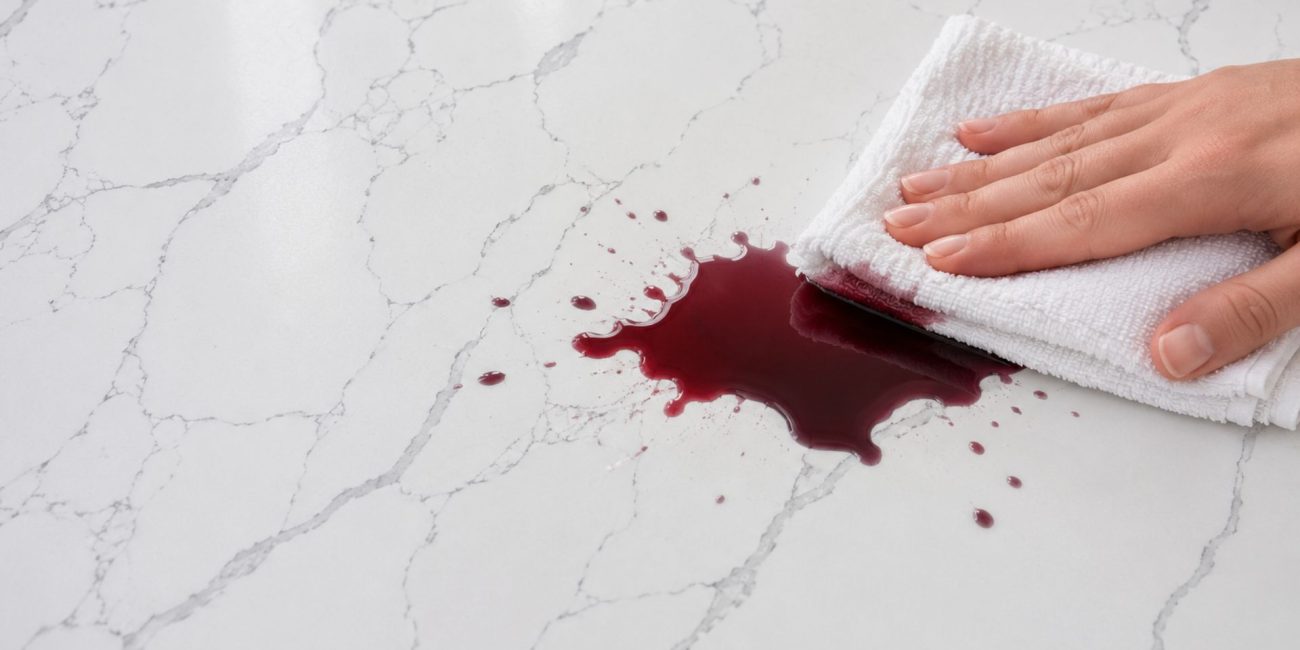
Homeowners often invest in premium engineered stone surfaces only to be haunted by the constant fear of a single spilt glass of red wine ruining their costly investment. Many ask, ‘Does quartz stain?’ And the direct answer is that while quartz is highly non-porous and stain-resistant, it is not 100% stain-proof against harsh chemicals or long-standing pigments.
By understanding the science of resin-binding and following a strict cleaning protocol, one can maintain a flawless, permanent finish. This guide leverages years of architectural material expertise to help navigate the realities of quartz maintenance, ensuring surfaces remain a pristine focal point.
Does Quartz Stain Under Normal Daily Use?
Quartz is engineered to be non-porous and highly resistant to common household liquids like wine, coffee, and oil. However, it can stain if exposed to harsh chemicals, solvents, or high-pigment substances (like permanent marker or turmeric) for extended periods, as these can react with the resin binders.
The term ‘stain-proof’ is a common industry myth. While water, coffee, and juices usually wipe away without a trace, certain substances can react with the resin binder to create a localised quartz stain. If a high-pigment liquid such as turmeric, saffron, or permanent marker is left to sit for 24 hours, it may create a surface-level shadow that requires specialised cleaning.
Why Is Quartz Considered Stain-Resistant Compared to Natural Stone?
The reason designers often recommend quartz over natural stone for high-traffic kitchens comes down to the fundamental difference in their physical structure. While natural stone is porous, quartz is engineered to be a dense, non-porous surface.
|
Feature |
Quartz (Engineered) |
Marble (Natural) |
Granite (Natural) |
|
Porosity Matrix |
< 0.05% (Non-porous) |
High (Highly Porous) |
Moderate (Porous) |
|
Sealing Required |
Never |
Every 6-12 months |
Every 1-2 years |
|
Stain Resistance |
Superior |
Low (Etches easily) |
High (If sealed) |
|
Acid Resistance |
High |
Low (Reacts with lemon) |
Moderate |
Can Quartz Stain from Common Household Items?
While daily spills are rarely a death sentence for the surface, certain categories of items pose a higher risk. Understanding these offenders is key to long-term care.
1. High-Pigment Foods and Spices
Items like beet juice, balsamic vinegar, and turmeric are potent. If these liquids dry on the surface, the pigment can bond to the resin.
- Example: A homeowner spills curry on a white quartz countertop and leaves it overnight. The yellow hue of the turmeric may require a paste of baking soda and water to lift the surface discolouration.
2. Acidic Cleaners and Chemicals
It is a misconception that stronger is better. Bleach, oven cleaners, and floor strippers can break down the chemical bond of the resin, leading to a permanent dull spot that looks like a stain but is actually chemical damage.
3. Heat-Induced “Stains”
Does white quartz stain easily from heat? Technically, heat causes thermal shock or resin burn. If a hot pan is placed directly on the surface, the resin can turn yellow or brown. This is a permanent chemical change, not a topical stain.
How to Clean Quartz Countertops Correctly?
Daily Cleaning Routine:
- Use a soft microfiber cloth.
- Apply warm water and a drop of pH-neutral dish soap.
- Wipe in a circular motion and dry with a separate towel to prevent water spots.
If you are currently sourcing materials, any experienced quartz supplier in Dubai will tell you that the secret to longevity is avoiding abrasive scrubbers that can microscopically scratch the factory finish.
For Stubborn, Dried Spills:
- Use a plastic putty knife to gently scrape off dried food or nail polish.
- Apply a glass cleaner (without ammonia) or a dedicated quartz cleaner.
- For ink or markers, a small amount of isopropyl alcohol on a cotton ball can safely lift the pigment without damaging the resin.
If you want to learn more about maintaining your surfaces, you can read our guide on how to clean quartz countertops to ensure they stay in pristine condition.
How Do You Remove a Set-In Stain from Quartz?
If a stain has already occurred, do not panic. Most “stains” on quartz are actually on top of the surface, not inside it.
- Baking Soda Paste: Mix baking soda and water into a thick paste. Apply to the area, cover with plastic wrap for 2 hours, and wipe away.
- Adhesive Removers: They are safe for short-term contact to remove sticky residues or oil-based stains.
- Professional Polishing: If the quartz stain is actually a chemical burn, a professional stone restorer can rehone the surface to bring back the original lustre.
Conclusion
While engineered quartz isn’t strictly indestructible, it remains the most resilient contender for the modern home. It offers a level of practical immunity to the red wine spills and citrus sprays that would permanently etch natural stone, making it a premier choice for high-traffic living.
Ultimately, maintaining that pristine finish comes down to a simple partnership between the material’s engineering and your daily habits. By swapping out abrasive chemical cleaners for gentle care and being mindful of high temperatures, you protect the specialised resins that give the stone its strength.
FAQs
Does lemon juice stain quartz?
Lemon juice will not stain quartz in the way it etches marble. However, the acid should not be left on the surface for hours, as prolonged exposure can eventually dull the resin’s polish. Always rinse with water after cooking with citrus.
Can I use bleach to remove a stain on white quartz?
No, it is highly recommended to avoid bleach entirely. While it may whiten the area initially, bleach is a harsh oxidant that weakens the resin binder over time, leading to permanent structural yellowing that cannot be reversed.
Is quartz more stain-resistant than granite?
Yes. Granite is a natural, porous stone that requires a chemical sealer to stay stain-resistant. Quartz is inherently non-porous due to its resin content and never requires sealing, making it more reliably stain-resistant over its lifetime.
Does a permanent marker come off quartz?
Yes, in most cases. A small amount of rubbing alcohol (isopropanol) or a specialised “magic eraser” used very gently can remove permanent marker. Always test a small, inconspicuous area first.
Why did my quartz develop a dull spot after cleaning?
A dull spot is usually not a pigment stain, but chemical etching or dried residue buildup. This happens if a chemical cleaner was not rinsed off properly or if an abrasive cleanser stripped away the factory polish.