
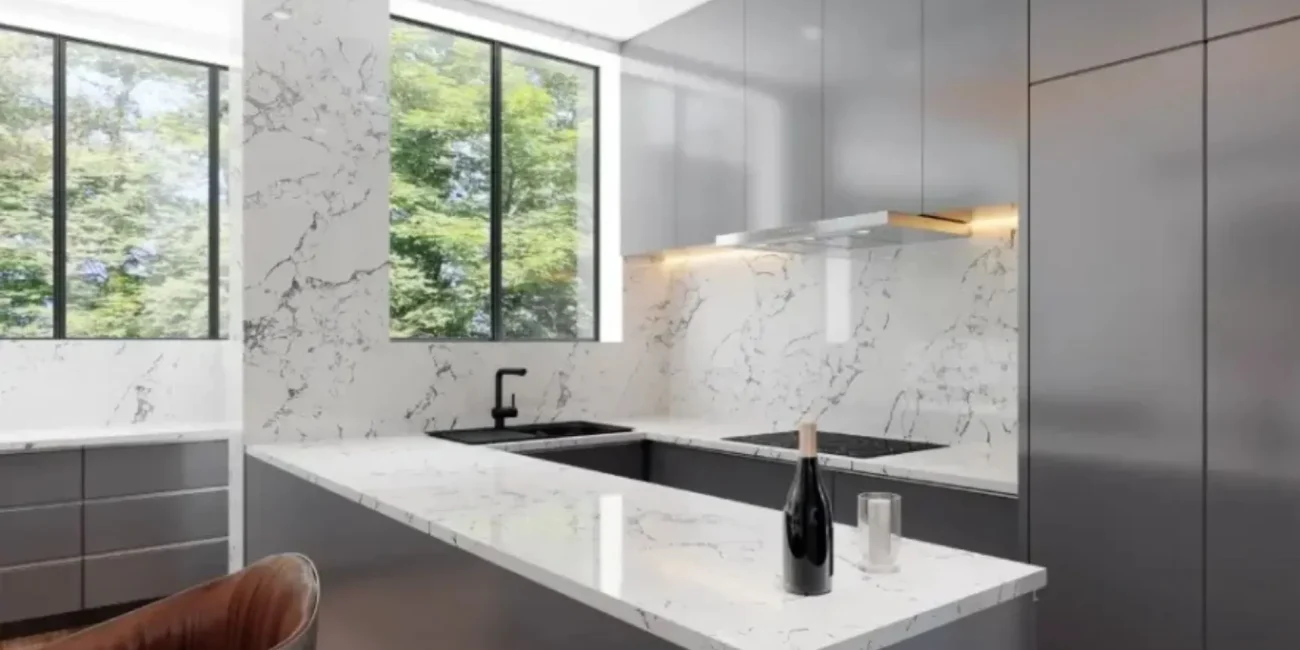
Choosing the right engineered stone is the best way to balance luxury and durability in your home. These surfaces offer a non-porous, stain-resistant, and low-maintenance alternative to natural marble or granite. By opting for this high-performance material, you ensure a beautiful, long-lasting finish that withstands the rigours of daily household use.
Whether you are renovating a modern kitchen or a busy bathroom, selecting the perfect slab involves more than just picking a color. You must consider technical specifications, texture, and how the material reacts to heat and moisture. In this guide, we will break down everything you need to know about styles, maintenance, and the latest trends to help you make a confident investment for your property.
What is Engineered Stone?
To put it simply, engineered stone is a man-made product. It is created by mixing roughly 90% to 95% crushed natural minerals (like quartz) with high-quality polymer resins and pigments. This mixture is then compacted under intense vibration, vacuum, and pressure to create a dense, solid slab.
When you work with a professional stone supplier in UAE, you will notice that these slabs come in a huge variety of styles. Because they are manufactured, they solve the common problems found in natural stone, such as “weak spots,” hidden cracks, and unpredictable patterns.
Where Can You Use Engineered Stone in Your Home?
Engineered stone is not limited to kitchens. It works beautifully across multiple areas of your home:
- Kitchen countertops and islands
- Bathroom vanities and wall panels
- Flooring in low-traffic luxury areas
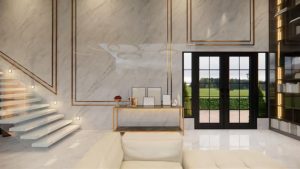
- Living room feature walls
- Window sills and shelves
- Utility and laundry areas
This flexibility makes it a complete surface solution for modern homes.
Why Choose Engineered Stone Countertops?
There are many reasons why homeowners are moving away from natural slabs and choosing engineered stone surfaces instead. Here are the main benefits:
1. Incredible Durability and Strength
Natural stones can sometimes be brittle. Because engineered stone is made using advanced resins, it has higher strength and flexibility. This means it is less likely to chip or crack, making it suitable for different areas of the home with regular use.
2. Non-Porous and Hygienic Surfaces
One of the biggest concerns with natural stone is staining. Liquids like water, oil, or other spills can seep into tiny pores. Engineered stone is completely non-porous, so liquids remain on the surface. This helps prevent stains and stops the growth of bacteria, mold, or mildew, making it ideal for maintaining hygiene across your home.
3. Design Consistency and Large Formats
When designing larger spaces like living areas, bathrooms, or wide surfaces, consistency matters. Natural stone varies from slab to slab, which can make joints noticeable. Engineered stone offers uniform patterns, helping create a smooth and seamless look throughout the space.
4. Low-Maintenance Lifestyle
Unlike marble or granite, which require regular sealing and care, engineered stone is easy to maintain. It does not need special treatments—just simple cleaning with a soft cloth and mild soap keeps it looking fresh and new for years.
Latest Design Trends in 2026
The trends for 2026 are moving toward “Warm Minimalism” and “Quiet Luxury”—styles that focus on high-quality materials rather than flashy decorations.
- Tactile Finishes: While high-gloss was the standard for years, 2026 is all about “Honed” (matte) and “Leathered” textures. These finishes offer a soft, velvet-like feel that adds depth to the room. Beyond looking beautiful, they are incredibly practical because they hide fingerprints and water spots much better than polished surfaces.
- Earthy Neutrals: The “all-white” kitchen is changing. Bright, cold whites are being replaced by warmer colors like Calacatta unique quartz and Alaska quartz. These soft tones reflect the natural marble desert landscape of the UAE. Using these colors creates a cozy, organic feel that makes your kitchen feel like a relaxing sanctuary instead of a clinical workspace.
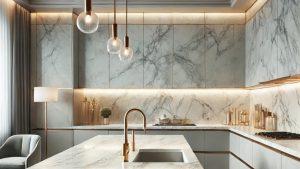
- Full-Height Splashes: Designers are now extending the engineered stone from the counter all the way up the wall to the underside of the cabinets. This eliminates grout lines, making the kitchen much easier to clean while creating a bold, “slab-heavy” luxury look that is very popular in modern villas.
How Engineered Stone is Installed: A Step-by-Step Look
Understanding the installation process helps you prepare your home for a smooth renovation. A professional stone supplier will typically follow these detailed steps to ensure a perfect fit across different areas of your home:
- Laser Templating: Once the base structure (such as cabinets, vanities, or surfaces) is permanently fixed, a technician uses high-tech lasers to create a digital “map” of the area. This captures every slight curve in your walls to ensure the stone fits perfectly.
- Professional Fabrication: Your chosen slab is taken to a facility where it is carefully cut and shaped with high precision. This process ensures that cutouts, edges, and design details are smooth, clean, and accurately finished to match the required specifications.
- Dry Fitting: Before any permanent adhesive is used, the installers place the stone in position. This test run ensures that alignment, spacing, and finishing details are correct.
- Invisible Bonding: Using a special colour-matched adhesive, the slabs are joined together. In high-quality installations, these joints are barely visible, creating a seamless and elegant appearance.
- On-Site Final Polish: Once the stone is fixed, the installers complete a final check. They clean the surfaces and lightly polish the edges to ensure a flawless finish, making the space ready for use.
Key Factors to Consider Before Choosing Engineered Stone
To choose the right engineered stone for your home, focus on these important factors:
1. Finish and Texture
Different finishes change both look and usability:
- Polished: Glossy and reflective
- Honed: Smooth and matte
Matte and textured finishes are better for hiding fingerprints and daily marks.
2. Color Selection
Choose colors based on your space and lighting:
- Light tones make small spaces look bigger
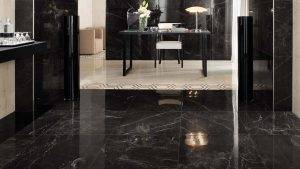
- Dark tones add depth and luxury
- Neutral shades create a warm and balanced look
Try to match the stone with your furniture, walls, and overall theme.
3. Thickness and Edge Profile
- Thicker slabs give a premium look
- Edge styles (straight, beveled, curved) impact the final design
These small details can completely change the appearance of your space.
4. Heat and Scratch Resistance
Engineered stone is durable, but:
- Avoid placing very hot utensils directly on the surface
- Use cutting boards to prevent scratches
This helps maintain its finish for years.
Conclusion
Choosing the right surface for your home is about finding a material that works as hard as you do. Engineered stone offers the perfect solution for modern living, providing the beauty of natural minerals with the strength of modern technology. By selecting a high-quality engineered stone from a trusted Fugenstone Quartz supplier in UAE, you ensure that your kitchen remains a stunning, functional part of your home for many years to come
Frequently Ask Question
Is engineered stone the same as quartz?
Mostly, yes. Quartz is the most common type of engineered stone. It is made by mixing natural quartz crystals with resin to create a super-strong surface.
Does it need to be sealed?
No. Unlike granite or marble, it is non-porous. You never have to apply a sealer to keep it waterproof or stain-resistant.
Can it be used outdoors?
Generally, no. Most engineered stone contains resins that can turn yellow or fade if exposed to direct UV sunlight for long periods. It is best kept for indoor use.
How do I remove a tough stain?
For dried-on spills, use a plastic scraper to gently lift the residue, then wipe with soap and water. Avoid using metal scrapers or harsh bleach, as they can dull the polish.
Is it more expensive than natural stone?
It is often more affordable than high-end marble. However, because it lasts longer and requires no maintenance, its “total cost of ownership” is usually much lower than that of natural stone.