
Choosing the perfect flooring can be overwhelming, especially when deciding between granite flooring vs marble flooring. Many homeowners struggle with durability, maintenance, and style, wanting a floor that is both long-lasting and visually appealing. In this guide, we will explore the key differences, benefits, and practical considerations of both options to help you make the right choice.
Drawing from years of experience working with premium stone, we’ll provide insights on factors that influence the cost, such as material type, thickness, finish, and installation complexity, ensuring you select a solution that fits your lifestyle and enhances your home’s elegance.
What is Granite Flooring?
Granite flooring is made from natural igneous rock known for its strength and resilience. It is highly resistant to scratches, heat, and heavy foot traffic. Available in a wide variety of colors, patterns, and finishes, granite can complement any interior style, from modern to traditional. Working with the top marble & granite supplier in Sharjah ensures you get high-quality slabs that last for decades.
Pros of Granite Flooring:
- Durability: Withstands scratches, cracks, and heat.
- Low Maintenance: Easy to clean and maintain.
- Versatility: Offers a variety of colors and finishes.
- Long-Lasting: Ideal for high-traffic areas.
Cons of Granite Flooring:
- Cold Surface: Can feel cold underfoot.
- Slippery: Polished surfaces can be slick.
- Cost Influencers: Price varies by thickness, finish, and supplier choice.
What is Marble Flooring?
Marble flooring is a metamorphic rock celebrated for its unique veining and luxurious appeal. It has been used in elegant homes and palaces for centuries. While marble adds timeless beauty, it requires careful handling and maintenance. Sourcing from the best marble supplier in the UAE ensures consistent quality and high-grade stone for your floors.
Pros of Marble Flooring:
- Elegant Look: Each piece has unique veins.
- Cool Underfoot: Perfect for warmer climates.
- Variety: Comes in many shades and patterns.
- Aesthetic Appeal: Enhances the visual elegance of spaces.
Cons of Marble Flooring:
- Maintenance: Prone to staining and needs regular sealing.
- Soft Surface: Can scratch or chip more easily.
- Slip Risk: Polished marble may be slippery.
- Cost Influencers: Affected by quality, veining, and source.
Granite Flooring vs Marble Flooring – Key Differences
| Feature | Granite Flooring | Marble Flooring |
| Durability | Highly durable, scratch-resistant | Softer, prone to scratches |
| Maintenance | Low, easy to clean | Requires regular sealing and care |
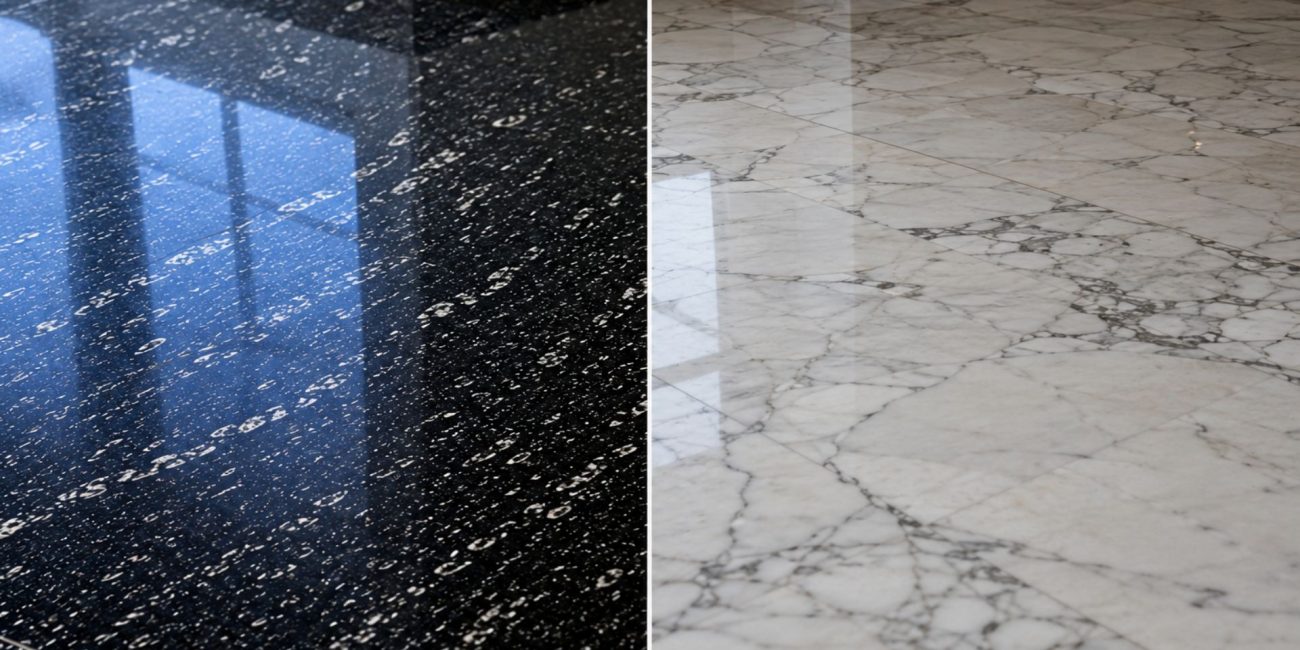
| Appearance | Speckled, uniform patterns | Unique veining, elegant appearance |
| Slip Resistance | Polished granite can be slippery | Polished marble is more slippery |
| Suitability | High traffic areas | Medium to low traffic areas |
Factors Affecting the Cost
While exact prices vary, several factors influence the overall investment for flooring:
- Material Quality: The grade and origin of the stone significantly impact the price. Premium granite or marble with unique patterns or high durability costs more than standard-grade slabs.
- Thickness and Size: Thicker slabs and larger tiles increase the material cost. Large-format pieces also require more careful handling during installation.
- Finish: Polished surfaces enhance the aesthetic appeal but may increase the price. Honed or textured finishes are often more affordable and provide a non-slip surface, which is ideal for bathrooms or kitchens.
- Complexity of Installation: Layouts with intricate patterns, borders, or custom cut-outs require more labour and precise workmanship, which can raise the overall cost.
- Supplier Choice: Sourcing from a natural stone supplier in Dubai ensures quality materials, warranty options, and expert installation guidance.
Which Stone Fits Your Home?
Lifestyle Consideration
- Homes with kids, pets, or frequent foot traffic benefit from granite due to its durability and low maintenance.
- Marble is ideal for formal living areas, bedrooms, or spaces where visual elegance is the main priority.
Climate and Usage
- Marble naturally stays cool, which is beneficial in hot climates.
- Granite can withstand temperature variations and heavy daily use, making it more versatile for different environments.
Design and Aesthetic Preferences
- Granite offers a variety of subtle patterns and colors for modern or minimalist interiors.
- Marble provides unique veining and a luxurious feel, which elevates the overall aesthetic of the space.
You can also explore complementary marble tile designs to enhance the visual harmony of your flooring.
Maintenance Tips for Lasting Elegance
Keeping your stone floors in pristine condition requires a mix of daily care and long-term protection. While both granite and marble are incredibly durable, they have different needs based on their mineral composition. Following these specific routines will ensure your investment remains beautiful for decades.
Granite Flooring: The Durable Standard
Granite is one of the hardest natural stones, making it resistant to scratches and heat. However, it still requires consistent care to keep its polished finish from dulling.
- Sweep and mop regularly: Use a soft microfiber dust mop daily to remove grit and dirt that can act like sandpaper on the surface.
- Use mild, non-acidic cleaning solutions: Avoid vinegar, lemon juice, or ammonia. Instead, use warm water with a drop of gentle dish soap or a dedicated stone cleaner.
- Seal the surface once a year: Even though granite is dense, it is slightly porous. Annual sealing helps maintain its shine and prevents oils from seeping into the stone.
- Avoid impact damage: While granite is tough, it can chip if heavy pots or metal objects are dropped. Use area rugs in high-traffic zones to add an extra layer of protection.
- Dry after mopping: Never let water air-dry on granite, as it can leave behind unsightly streaks or mineral deposits. Use a clean, dry cloth to buff the floor after cleaning.
Marble Flooring: The Delicate Luxury
Marble is a softer, calcium-based stone, which makes it more sensitive to acids and physical wear. It requires a gentler touch to retain its famous natural sheen.
- Wipe spills immediately: Acids from things like orange juice, coffee, or wine can “etch” (dull) the surface of marble in minutes. Always blot spills immediately—never rub them, as this spreads the liquid.
- Use pH-neutral cleaners: Only use cleaners specifically labelled for marble. This preserves the surface and prevents the stone from becoming yellow or cloudy over time.
- Apply sealant every 6–12 months: Because marble is more porous than granite, it needs more frequent sealing to create a protective barrier against moisture and stains.
- Prevent physical scratches: Use felt pads under all furniture legs and strictly avoid dragging heavy items across the floor. Even small pebbles caught in shoe treads can leave permanent marks.
- Maintain a soft cleaning routine: Use only soft mops and cloths. Avoid using vacuum cleaners with beater bars, as the hard plastic or metal can scratch the delicate surface.
- Buff for brilliance: Every few weeks, use a dry chamois cloth to buff the marble. This helps maintain the natural glow without using waxy buildup products.
Conclusion
Deciding between granite flooring vs marble flooring depends on your lifestyle, design preferences, and the intended use of the space. Granite offers durability, low maintenance, and is perfect for high-traffic areas, while marble brings timeless elegance and a luxurious feel.
By considering material quality, thickness, and finish, and choosing trusted suppliers like a marble supplier in the UAE, you can ensure a stunning and long-lasting floor. Proper maintenance and thoughtful selection will keep your floors beautiful for years.
FAQs
Which is more durable, granite or marble?
Granite is more durable and resistant to scratches, heat, and heavy foot traffic, making it ideal for both flooring and countertops in busy areas.
Does marble require more maintenance than granite?
Yes, marble needs regular sealing and gentle cleaning to prevent stains and scratches, especially in areas prone to spills.
Which flooring is better for high-traffic areas?
Granite is recommended because it can withstand constant use without showing wear, making it a practical choice for hallways, kitchens, and living spaces.
Can marble and granite be combined in a single design?
Absolutely! Combining marble and granite can create an elegant and dynamic look, as long as the colors and patterns are balanced carefully.
Where can I source high-quality granite and marble in the UAE?
You can find premium materials from trusted suppliers in Dubai and Sharjah, ensuring good quality, durability, and professional guidance for your project.