
You must have seen marbles from temples, sculptures, luxury homes, and iconic landmarks. But do you know the journey behind it? Before they take shape as polished countertops or elegant floors, marble stones have been around for 1000 years; they have a story worth telling, a story of marble formation.
It begins with the discovery of an ordinary limestone buried deep beneath the Earth’s surface that gradually goes under immense heat and pressure to become the world’s most admired natural stone. From luxury houses to offices, countertops to floors, and sculptures to buildings, this natural stone enhances the space in every way possible.
Marble forms naturally over millions of years before being quarried, processed into slabs, and installed in homes and commercial spaces. Understanding how marble is made not only explains its beauty and durability but also helps you appreciate why every slab is unique and why it remains one of the world’s most valued natural stones.
In this guide, you’ll discover how marble forms in nature, what creates its colors and veining, how it is mined and manufactured, where it is used, and how proper care helps preserve its timeless appeal.
What Is Marble Made Of?
Before exploring how marble is formed, mined, and manufactured, it’s helpful to understand what marble is actually made of.
Marble is a natural metamorphic stone composed primarily of tightly packed calcium carbonate crystals. When limestone is exposed to intense heat and pressure beneath the Earth’s surface, these crystals recrystallize to form the dense, elegant stone used in homes and commercial spaces today.
Marble Formation at a Glance
|
Stage |
What Happens |
|
Limestone Forms |
Marine deposits settle and pack together to become limestone. |
|
Heat and Pressure |
Earth moves deep underground, and limestone changes into marble. |
|
Quarrying |
Large blocks are extracted safely from the mountain walls using diamond saws. |
|
Manufacturing |
Blocks become polished slabs through slicing, resin treatment, and buffing. |
|
Installation |
Finished marble is inspected and used for luxury home and office surfaces. |
The Geological Process Behind Marble Formation
How Does Limestone Become Marble?
The creation of marble is a natural journey that takes millions of years to complete. It happens in three simple steps:
- Layers Build Up: Long ago, shell fragments and other ocean debris settled at the bottom of ancient seas, packing tightly together to form a soft rock called limestone.
- Earth Moves: Over time, movements in the Earth’s crust pushed this limestone deep underground.
- Heat and Pressure: Deep below the surface, the limestone was squeezed by heavy pressure and baked by extreme heat. This caused the soft stone to melt and pack together tightly, turning it into the hard marble we use today.
At this stage, marble has transformed from ordinary limestone into a dense natural stone. But nature’s work isn’t finished yet. During this remarkable transformation, minerals trapped deep within the rock begin to shape the colors, patterns, and flowing veins that make every marble slab one of a kind. This is the moment when marble stops being just stone and becomes a natural work of art.
How Does Marble Get Its Colors and Veining?
The distinctive colors and veining found in marble are created by natural minerals that become trapped inside the limestone long before it transforms into marble. As intense heat and pressure reshape the stone over millions of years, these minerals spread, crystallize, and form the intricate patterns that give every slab its unique character.
Different minerals create different colors:
- Iron oxides produce warm shades of red, pink, yellow, and gold.
- Graphite creates dramatic grey and black veining.
- Serpentine and other minerals introduce beautiful green tones.
- Clay and mineral impurities contribute subtle cream, beige, and brown hues.
Because the type, quantity, and movement of these minerals vary from one location to another, no two marble slabs are ever exactly alike. Every piece carries a geological fingerprint that has been millions of years in the making, making marble one of the few natural building materials that combines durability with completely unique visual beauty.
How Marble Is Mined from the Earth?
After spending millions of years forming beneath the Earth’s surface, marble stone is finally ready to begin its journey above ground. Before it can become elegant flooring, countertops, or architectural features, it must first be carefully extracted from the mountains where it has rested for centuries.
This precision mining process preserves the stone’s natural beauty and allows large, flawless marble blocks to be transformed into luxury surfaces.
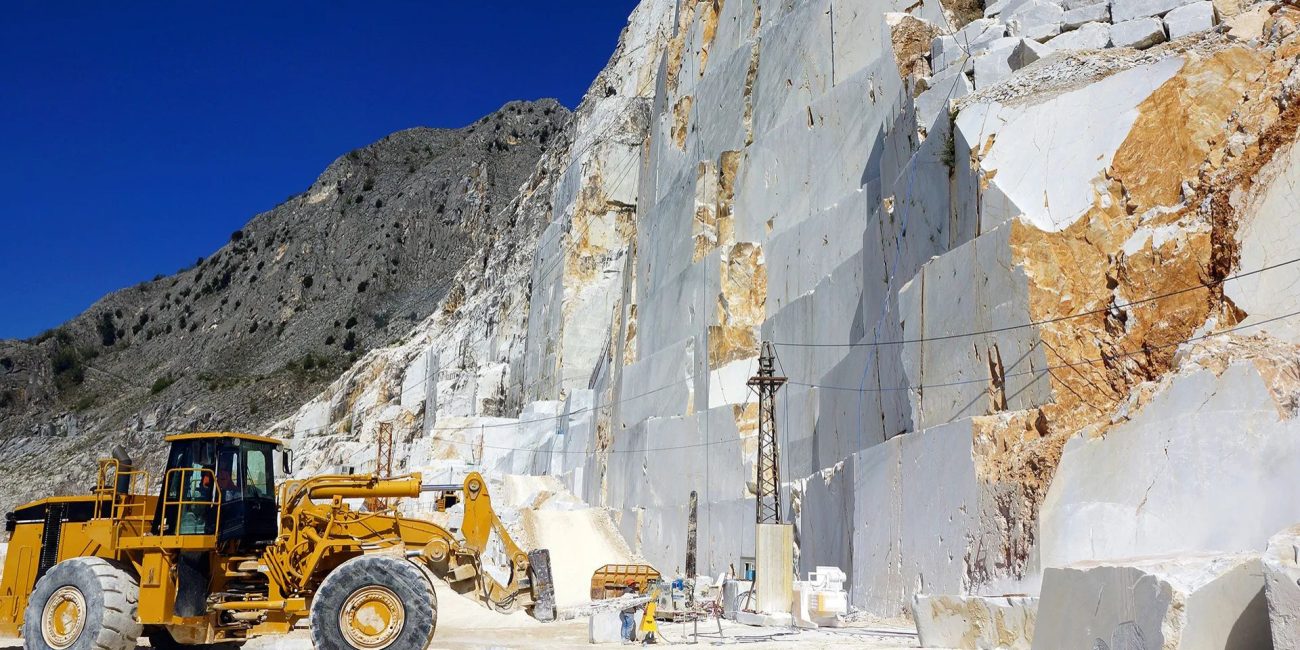
- Open Quarries: The process begins by removing layers of soil and rock to expose the natural marble deposits hidden within the mountain.
- Diamond Wire Saws: Instead of using explosives that could crack or damage the stone, specialized diamond-coated wire saws make precise cuts through the marble, preserving the integrity of each block.
- Lifting the Blocks: Once a block is separated from the mountain, powerful cranes carefully lift these massive sections, often weighing several tons, onto heavy transport vehicles before they begin their journey to the manufacturing facility
Industrial Journey of Marble Becoming Polished Slab
Once the marble blocks leave the quarry, their natural journey enters its final stage. Although the stone has already been shaped by millions of years of geological transformation, it still needs skilled craftsmanship and precision engineering before it becomes the elegant slabs used in homes and commercial spaces.
Every cut, polish, and inspection during industrial marble manufacturing is carefully carried out to preserve the marble’s natural beauty while preparing it for everyday use.
- Slicing into Slabs: Large Marble factory machines with multiple blades cut the big blocks into thin, even sheets. These sheets are usually about two or three centimeters thick.
- Filling the Pores: Because natural stone can have tiny air pockets or small cracks, workers coat the sheets with a special liquid resin. This fills any small holes and makes the stone much stronger.
- Buffing to a Shine: The stone slabs move under large spinning pads that rub the surface with finer and finer polishes until the marble achieves its famous glass-like shine.
- Quality Inspection: Workers inspect each slab for cracks, thickness, color consistency, and finish before preparing it for shipping and installation.
Where Is Marble Used?
Once the manufacturing process is complete, the finished slabs are ready to be used in various architectural projects. Because marble is both elegant and durable, it can be shaped to fit many different areas of a home or building.
- Kitchen Countertops: Create elegant, heat-resistant workspaces that become the focal point of modern kitchens.
- Bathroom Vanities: Add a luxurious, spa-inspired finish to countertops, walls, shower surrounds, and sink areas.
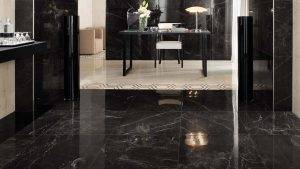
- Flooring: Brighten living rooms, hallways, and entryways with durable surfaces that enhance the sense of space.
- Wall Cladding: Transform feature walls, reception areas, fireplaces, and commercial interiors with natural stone textures and distinctive veining.
- Staircases: Elevate stairways with seamless, sophisticated designs that combine strength with timeless elegance.
- Fireplaces: Create stunning focal points that add warmth, character, and luxury to both traditional and contemporary interiors.
- Dining Tables and Furniture: Bring natural elegance to tabletops, coffee tables, and custom furniture with one-of-a-kind patterns.
- Commercial Spaces: Enhance hotels, offices, retail stores, and luxury developments with premium marble finishes that leave a lasting impression.
How to Keep The Marbles New
The beauty of marble is its texture, design, and durable luxury appeal. And keeping it alive for an extended period is possible with just a little care and precautions.
Just follow the following steps and keep the stains on marbles clean:
Daily Care
- Wipe Spills Fast: Clean up liquids like wine, coffee, juice, and tomato sauce immediately so they do not stain or dull the surface.
- Use Mats and Coasters: Put coasters under glasses and heat pads under hot pots to protect the smooth finish.
- Use Mild Cleaners: Wipe down your surfaces using regular warm water, mild dish soap, or a specialty stone cleaner.
Mistakes to Avoid
- Don’t use vinegar or lemon: Never use acidic household cleaners, as they will eat away at the polished finish and leave dull spots.
- Avoid rough scrubbers: Do not use steel wool or scratchy sponges that can leave permanent marks on the stone.
- Don’t leave puddles: Wipe up standing water promptly to stop cloudy water spots from forming.
How to Identify High-Quality Marble
After millions of years of natural formation and careful craftsmanship, the final quality of marble still depends on the slab you choose. Not every marble slab offers the same strength, finish, or durability. Knowing what separates premium-quality marble from lower-grade alternatives helps you make a smarter long-term investment.
|
What to Look For |
Lower-Quality Marble |
High-Quality Marble |
|
Strength |
Hidden cracks or weak areas that may fail over time |
Dense, reinforced slabs with excellent structural integrity |
|
Surface Finish |
Uneven polishing, scratches, or dull patches |
Smooth, consistent finish with a natural, high-gloss appearance |
|
Thickness |
Uneven thickness that makes installation difficult |
Uniform thickness for easier installation and a seamless finish |
|
Quality Guidance |
Limited product knowledge or after-sales support |
Expert advice on selecting, installing, sealing, and maintaining marble |
Tip: Always buy marble from a trusted marble company in Dubai, and to ensure 100% quality, inspect the slab in person.
The Journey Behind Every Marble Slab
Every marble slab tells a story that began millions of years before it reached your home. What starts as ordinary limestone beneath the Earth’s surface is gradually transformed by nature into one of the world’s most admired natural stones. Through careful quarrying, expert craftsmanship, and precise finishing, that raw rock becomes the elegant surfaces found in kitchens, bathrooms, flooring, and architectural masterpieces.
Understanding how marble is made helps you appreciate more than just its beauty. It explains why every slab is unique, why proper care matters, and why choosing high-quality marble from a trusted marble supplier makes a lasting difference. Whether you’re planning a new home, renovating a space, or simply curious about this remarkable stone, knowing its journey allows you to invest with greater confidence and enjoy its timeless elegance for generations.
Frequently Asked Questions About Marble
How is marble made naturally?
Marble is formed when underground sedimentary limestone is changed by intense heat and heavy pressure from the Earth’s tectonic movements. This natural process baked the soft stone, melting and reforming its crystals into a much harder, tightly packed rock.
Where does marble come from geographically?
Marble comes from deep inside mountain ranges all over the world, where ancient landmasses shifted. It is mined in huge amounts in countries like Italy, Greece, Spain, India, and Turkey, where geological forces created vast stone deposits.
How is marble mined from the ground?
Marble is mined from large open pits in the mountains using long, diamond-coated wire saws that cut through the stone cleanly. Workers avoided using explosives so the marble would not crack, using heavy cranes to lift the large blocks instead.
What is the manufacturing process for marble slabs?
The manufacturing process involves cutting large blocks into thin sheets, applying a liquid resin to fill any natural pores, and buffing the surface. Spinning factory pads rub the stone until it is perfectly smooth and shiny before a final quality check.
Why is marble considered a luxury choice?
Marble is considered a luxury choice because it takes millions of years to form, requires expert work to harvest, and features beautiful patterns. Since nature creates every vein, no two homes will ever have the same design.
Can marble be recycled?
Yes, old or broken marble can be crushed and recycled to make engineered stone surfaces, terrazzo flooring, or gravel for landscaping projects. This keeps valuable material from being thrown away.
Is marble stronger than granite?
No, granite is harder and stronger than marble because it forms from cooled volcanic magma, making it highly resistant to scratches and household acids. Marble is a softer stone that requires gentler cleaning and care.
How long will the marble last?
With proper installation, regular sealing, and routine maintenance, marble can last for generations or even centuries. Many historic buildings and monuments around the world still feature original marble, demonstrating its exceptional durability and timeless appeal.
Can marble be used outdoors?
Yes. Marble can be used outdoors for patios, walls, walkways, and other exterior applications. However, a honed or textured finish is usually recommended because polished marble can become slippery and gradually lose its shine due to weather exposure.