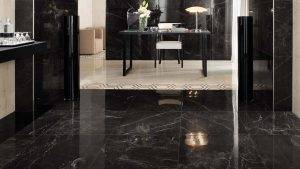


Acid spills on marble can leave dull, cloudy, or rough marks within minutes. While light stains can often be removed at home, acid etching permanently changes the surface and requires a different treatment. Understanding the difference is the key to restoring your marble safely.
Marble floors bring an elegant, luxurious look to any home, but their sensitive chemical makeup leaves them highly vulnerable to immediate damage. Everyday items like coffee, lemon juice, vinegar, wine, and harsh bathroom cleaners react instantly with the stone, eating away at the surface to leave behind unsightly, dull, or rough patches.
If you have just noticed a cloudy mark or a rough spot on your floor, understanding how to address it safely is critical. This guide explains how to identify the damage, choose the right treatment, and safely restore your marble floor without making the problem worse.
What Causes Acid Stains on Marble Floors?
Marble contains calcium carbonate. When acid comes into contact with the surface, it reacts with the calcium carbonate and dissolves a microscopic layer of the polished finish. This leaves behind dull, cloudy, or rough areas known as acid etching.
The most common culprits behind these marks include:
- Everyday kitchen spills: Citrus fruits (lemon, lime, orange), tomatoes, vinegar, coffee, or wine.
- Incorrect cleaning products: Generic household cleaners, window sprays, or DIY solutions with low pH levels.
- Harsh bathroom/kitchen chemicals: Cleaners containing bleach, limescale removers, or aggressive tile acids.
Can Acid Stains Be Removed from Marble?
Yes. Light surface discoloration can often be removed using a marble poultice or a localized baking soda paste. However, if the acid has chemically eaten into the stone (etched it), professional mechanical polishing is usually required to erase the physical damage and restore the uniform shine.
How Do Acid Stains Affect Marble Floors?
Acid does more than leave a visible stain. Because marble is made from calcium carbonate, acidic substances chemically react with the stone and gradually damage its polished surface. Even a small spill can affect both the appearance and durability of your marble floor if it is not cleaned immediately.
Over time, acid exposure can:
- Dull the polished finish and reduce the natural shine.
- Leave cloudy white patches or visible etch marks.
- Weaken the stone’s protective surface layer.
- Create rough or uneven textures.
- Increase the risk of scratches and further wear.
- Reduce the visual appeal and value of premium marble flooring.
Expert Tip: If your marble no longer reflects light evenly or feels rough to the touch after cleaning, the damage is likely acid etching rather than a removable surface stain.
What to Do Immediately After an Acid Spill
- Blot the Spill Immediately: Press a clean microfiber cloth directly onto the spill. Do not wipe or rub the liquid, as this spreads the acid across a larger surface area.
- Rinse with Distilled Water: To neutralize the zone, pour a small amount of clean, distilled water over the affected area to dilute any remaining acidic compounds.
- Dry the Surface Completely: Prevent watermarks by patting the area dry using a separate, soft microfiber towel. Inspect the dry stone under oblique light to assess the surface texture.
Special Tip to Clean Acid Spill on Marble Floor: Never use vinegar, bleach, or abrasive cleaners to neutralize the spill and remove any stain from marble surfaces.
What Is the Fastest Way to Protect Marble After an Acid Spill?
Blot the spill instantly with a clean microfiber cloth without rubbing, rinse the area thoroughly with clean water, and dry it completely with a soft towel. Acting quickly stops the chemical reaction and reduces the severity of permanent etching.
Is It an Acid Stain or an Etch Mark?
Before choosing a restoration method, you must diagnose exactly what happened to the stone. A stain occurs when a dark pigment sinks into the porous stone pores, causing discoloration. An etch mark occurs when acid eats away the surface material, causing structural damage.
|
Condition |
Appearance |
Surface Texture |
Correct Solution |
|
Surface Stain |
Dark, yellow, or localized discoloration |
Smooth and flat to the touch |
Baking soda paste or specialized marble poultice |
|
Light Etching |
Dull, white, cloudy mark |
Slightly rough, visible under light |
Marble polishing powder or fine honing paste |
|
Severe Etching |
Rough patch with no reflection |
Coarse feel, clearly indented |
Professional marble floor restoration |
|
Deep Pitting |
Visible erosion or structural divots |
Physically rough and cratered |
Professional diamond honing and resin repair |
Expert Recommendation: If the area looks dull but still feels smooth, it may be a very light etch or a superficial stain. If it feels rough or uneven, the marble has been etched and will usually require polishing.
How to Remove Acid Stains from Marble Floors
Method 1: Apply a Baking Soda Paste for Light Stains
Baking soda is alkaline and mildly abrasive, making it effective for pulling out light, organic surface discoloration.
Important Technical Note: Baking soda is suitable only for light stains and occasional spot use. It cannot repair acid etching because etching is physical surface erosion rather than deep discoloration.
- Mix baking soda with a small amount of distilled water until it reaches a thick, paste-like consistency.
- Spread the paste gently over the mark without rubbing or scrubbing it into the floor.
- Cover the paste with plastic wrap and tape down the edges to seal in the moisture. Let it rest for 24 hours.
- Remove the plastic wrap and let the paste air dry completely.
- Carefully wipe it away using a damp microfiber cloth and pat the surface dry with a clean towel.
Can Baking Soda Damage Marble?
Yes, if used incorrectly. While baking soda is safe as a static paste to draw out light stains, it is still a mild abrasive. If you scrub dry baking soda forcefully across polished marble, it can create fine micro-scratches, dulling the natural luster of the floor.
Method 2: Use a Marble Poultice for Deeper Discoloration
When a dark pigment has penetrated deep into the stone pores, a chemical drawing action is required.
- Purchase a specialized commercial marble poultice powder or cream from a dedicated stone care specialist or hardware supplier.
- Mix the poultice according to the manufacturer’s instructions and apply it evenly over the stained area at a thickness of about 5–6 mm.
- Cover the mixture with plastic wrap, tape down the edges with painter’s tape, and poke a few tiny holes in the plastic to allow slow evaporation.
- Leave the mixture in place for 24 to 48 hours to naturally draw the embedded discoloration out of the stone matrix.
- Remove the cover, scrape the dry paste off using a plastic putty knife (never use metal), rinse with distilled water, and dry thoroughly.
What Cleaner Should You Use on Marble?
For daily cleaning and post-stain maintenance, avoid generic household detergents. Ensure your stone care products meet these strict parameters:
- Strictly pH-Neutral: Look for pH-neutral cleaners specifically formulated for natural stone. This prevents the gradual breakdown of your defensive stone sealer.
- Certified for Natural Stone: The packaging must explicitly state safety compliance with marble, limestone, or travertine.
- Free from Harsh Alkalis: Avoid products containing bleach or ammonia, which can cause long-term surface yellowing or pigment degradation.
- Non-Acidic: Ensure there are no hidden citrus extracts, vinegar components, or heavy chelating agents designed to strip scale.
Common Mistakes to Avoid When Handling Acid Spills
- Scrubbing Aggressively: Using force fractures the soft, polished surface layer and grinds abrasive particles into the stone structure.
- Using Household Acids: Spill cleanup should never involve vinegar, lemon juice, or generic toilet cleaners. These accelerate the chemical etching damage exponentially.
- Applying Bleach: Bleach creates deep chemical discoloration, alters the stone’s mineral stability, and strips out natural pigments.
- Using Steel Wool or Green Scouring Pads: Abrasive pads deeply scratch soft natural stone, creating rough patches that cannot be fixed without heavy industrial machinery.
- Leaving Spills Overnight: Giving acidic compounds hours to sit allows them to deeply erode the stone’s calcium carbonate matrix and establish serious structural damage.
- Ignoring Regular Maintenance: Leaving marble unsealed removes your primary defensive barrier, allowing liquids to be absorbed instantly.
Signs You Need Professional Marble Restoration
While light stains can often be treated at home, severe acid damage usually requires professional restoration to restore the marble’s original finish.
You should consider professional marble restoration if:
- The surface feels rough or uneven after cleaning.
- Marble polishing powder does not improve the shine.
- Deep etch marks or pits are visible.
- The marble has permanently lost its glossy finish.
- Multiple areas across the floor are etched or dull.
- Cracks, chips, or structural damage accompany the stain.
Professional restoration methods such as honing, polishing, crack repair, and resealing can safely restore the marble’s smooth surface and protect it from future damage.
How to Prevent Acid Stains on Marble Floors
- Clean up all accidental spills immediately without exception.
- Use protective silicone-lined coasters under all glasses, mugs, and bottles.
- Place attractive trays under cooking oils, vinegars, and cosmetics in kitchens and bathrooms.
- Have your floors treated with a high-quality penetrating stone sealer every 6 to 12 months.
- Dust mop or vacuum floors frequently to prevent abrasive dirt from scratching the polished surface finish.
- Use only certified pH-neutral cleaners for your daily damp mopping routines.
- Use floor mats near entrances to reduce grit that can scratch polished marble.
Quick Summary
|
Situation |
What to Do |
|
The Problem |
Acidic liquids chemically etch marble, leaving dull or rough marks. |
|
Immediate Action |
Blot the spill, rinse with water, and dry the surface immediately. |
|
DIY Treatment |
Use a baking soda paste for light stains or a marble poultice for deeper discoloration. |
|
Long-Term Prevention |
Use pH-neutral cleaners, seal the marble every 6–12 months, and clean spills immediately. |
|
Professional Restoration |
Choose professional honing and polishing for deep etching, pitting, or severe surface damage. |
Conclusion
Removing acid stains from marble floors begins with identifying the type of damage. Light surface stains can often be treated using a baking soda paste or a marble poultice, while acid etching requires professional honing and polishing to restore the stone’s original finish. Acting immediately after a spill, using only pH-neutral marble cleaners, and avoiding acidic or abrasive products can significantly reduce permanent damage.
For long-term protection, clean spills promptly, seal your marble floors every 6 to 12 months, and follow a regular maintenance routine designed for natural stone. By understanding the difference between stains and etching, using the correct cleaning methods, and knowing when to seek professional restoration, you can preserve your marble floors’ beauty, durability, and value for years to come, like it is just out of a marble factory.
Frequently Asked Questions
Can acid etching be reversed?
Yes, acid etching can be reversed, but because it is physical surface damage rather than a cosmetic stain, it cannot be washed out. Light etching can be rubbed away using a specialized marble polishing powder. Deep etching requires mechanical honing by a professional stone restoration specialist to grind down the surface until it is perfectly level again.
Is marble permanently damaged by acid?
Not necessarily. While acid causes immediate chemical erosion, the damage is usually limited to the microscopic surface layer of the stone. Unless the acid is left to sit for days and creates deep structural holes, the dullness and discoloration can be completely corrected through proper stain removal or professional mechanical polishing.
Does baking soda remove acid stains from marble?
Baking soda can help remove light, dark-pigmented surface stains by drawing the color out of the stone’s pores. However, it cannot repair acid etch marks, because etching is a physical dull spot where the stone has been eaten away, not a color stain.
How do I protect my kitchen marble surface from damage?
Use coasters, clean up spills quickly, and never use harsh cleaners. Also, it is important to regularly seal it.
Can I use hydrogen peroxide on marble?
Yes, hydrogen peroxide (typically a 3% or 12% solution mixed into a paste with an absorbent powder) is safe to use as a poultice specifically for organic, dark, or water-based stains on light-colored marble. Avoid using it on very dark marble, as it can occasionally cause slight bleaching or lightening of the stone’s natural dark pigments.
Note: Always test it on an inconspicuous area first or ask the best marble supplier for advice.
How long should a poultice stay on marble?
A marble poultice should stay on the surface for 24 to 48 hours. It must be covered with plastic wrap for the first 24 hours to keep it wet so it can dissolve the stain, followed by a period where the plastic is removed so the paste can dry completely and pull the trapped stain out into the poultice powder.
What is the safest cleaner for marble floors?
The safest cleaner for marble floors is a dedicated, soap-free, pH-neutral natural stone cleaner. Alternatively, clean, warm distilled water used with a highly damp microfiber mop is completely safe for quick daily dust removal.